
A curated edit of affordable home accents with a high-end feel
There’s a reason some homes feel instantly put together… and others feel like a collection of furniture waiting for a purpose.
It’s rarely the sofa or the coffee table. It’s the details. The ones you don’t consciously notice, but you feel. The right pieces add warmth and a sense that everything just works; the wrong ones quietly throw things off, and the room never quite lands.
Most people get stuck thinking they need a full overhaul. But it’s not about adding more decor—it’s about choosing better pieces. You want the kind of items that make your home feel calmer, more finished, and like somewhere you actually want to be after a long day.
This is that edit. A curated collection of budget-friendly finds that look expensive because they bring the texture, coziness, and presence a space needs to feel lived-in and intentional.
No filler. No overthinking. Just pieces that do their job quietly… and do it well.
The “Expensive Home” Cheat Sheet
The 5-Minute Home Refresh: Instant Upgrades for a More Intentional Space
If you don’t buy a single thing today, do these three things first. They take five minutes and cost $0.
- Add One “Heavy” Textile: Toss a chunky knit or weighted woven piece over the sofa. If a textile is flimsy or too smooth, it’s failing the room.
- The Material Swap: Hide the plastic. If a tray, storage bin, or accent is shiny and lightweight, swap it for wood, glass, or ceramic. Same function, completely different aesthetic.
- Lower the Light: Stop using the “big light” (the overhead). Add one eye-level source—a candle or a small lamp—to add depth and soften the mood instantly.
Or scroll—these are worth seeing.

Pin this cozy luxe guide for your next stylish budget haul!
✨ This post includes affiliate links, which means I may earn a small commission if you purchase at no extra cost to you. I only recommend what I personally love and think you will too. As an Amazon Associate, I earn from qualifying purchases.
The Intentional Edit: Affordable Finds That Add Designer Touches
When it comes to home decor, I am a ruthless editor. I’m not looking for “more stuff”; I’m looking for the perfect piece that makes a room feel complete without the clutter.
These finds take a space from “almost” to “oh yeah.” They soften edges, add comfort, and make a home feel curated in a way that isn’t forced.
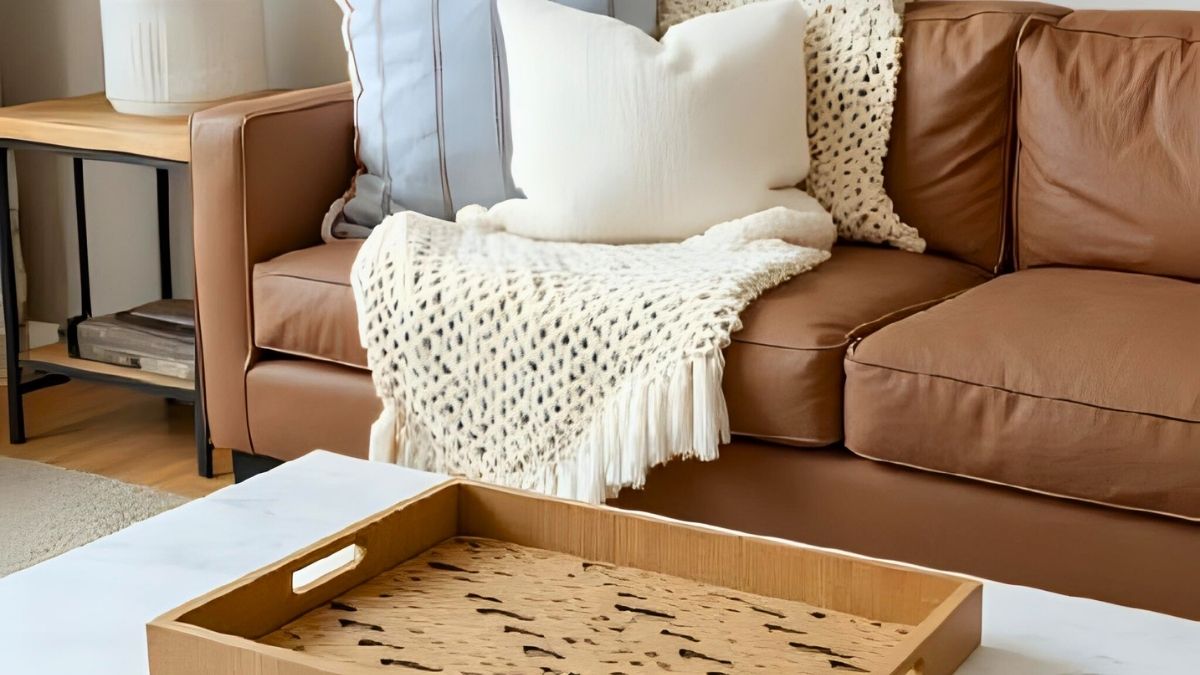
The Cozy Heathered Throw: Creating High-End Sofa Texture
How to Style a Throw Blanket for a Professional, High-End Sofa Look
The Verdict: If you’re only adding one thing from this list, make it this. A sofa without a throw always feels a little underdressed to me. This is the easiest (and comfiest) fix for a room that feels “flat.”
Why It Works: A good blanket should feel like a soft hug. Unlike thinner throws that disappear into the cushions, this has that Barefoot Dreams essence and a deluxe, super plush weave. It adds a cushy, high-end touch that looks as good as it feels.
What It Fixes: Most living rooms feel incomplete because everything is at the same visual level. This breaks up the monotony of the sofa with tactile contrast.
How to Style It: Drape it loosely over one corner or layer it across the arm of a chair. Don’t fold it perfectly—the relaxed, “lived-in” look is what makes it feel designer rather than staged.
Natural Woven Baskets: Swapping Plastic for Organic, Curated Storage
The “Why Does My House Feel Chaotic?” Fix
The Verdict:
If your space feels a little… hectic, even after you clean it, this is probably what’s missing.
Why It Works:
There’s something about woven texture that instantly softens a room. These don’t just hold things—they warm everything up. And unlike plastic bins (we’ve all been there), they actually hold their shape and look like they belong.
What It Fixes:
This is one of those upgrades you notice immediately—because the room finally feels calm. The remote, the charger, the “I’ll deal with this later” pile that somehow never leaves. This is how you camouflage it without your home looking like a filing system.
How to Style It:
Set one on a coffee table or shelf and give it a job—blankets, books, the nightly wind-down essentials. Keep it edited regularly. Give it a job—and stick to it. This is calm, not storage Tetris.
The Portable Cordless Lamp: Layering Interior Lighting Without the Eye-Sore Cords
The Best Way to Add Mood Lighting to Dark Corners (No Outlets Required)
The Verdict:
If your lighting situation is overhead-only, this is about to change your entire evening mood. I didn’t realize how much lighting affected a room until I stopped relying on overhead lights. Layered light (lighting at different heights)is a real difference maker; a shift that makes everything else click.
Why It Works:
It’s simple, it’s cordless, and it doesn’t send the message “I bought this for convenience.” The glow is soft, warm, and just makes everything look better.
What It Fixes:
That harsh, slightly interrogative lighting that makes everything feel less relaxing than it should. Also: those awkward dark corners you’ve been ignoring.
How to Style It:
Put it somewhere unexpected—an entry table, a bookshelf, a mantel—and turn it on at night instead of the overheads. Suddenly, your home feels candlelit and inviting.
If your space has been feeling “almost there,” pick one of these and try it this week.
You don’t need a full reset—just one good decision.
Mixed Material Candle Hurricanes: Using Brass and Glass for a Polished Tablescape
Create an Expensive-Looking Mantel or Tablescape on a Budget
The Verdict:
When your candle holder game feels more Dollar Tree than Anthropologie, this is the upgrade that gives a high-end look.
Why It Works:
Glass + warm brass is one of those combinations that just looks expensive without trying. It reflects light, adds height, and feels like something you didn’t grab last minute.
What It Fixes:
That spot on your table where something should be happening… but isn’t.
How to Style It:
One on a mantel is enough. Two of varying heights on a dining table feel deliberate. Add a simple candle, dim the lights, and suddenly you’re not just home—you’re in a mood.
The Minimalist Floating Frame: Turning Personal Photos into Elevated Gallery Art
The Stylish Trick for Displaying Personal Photos Without the Clutter
The Verdict:
This is how you make your home feel personal without it turning into a scrapbook explosion.
Why It Works:
The floating design is a personal favorite of mine. It keeps things light and minimal, while the brass edge grounds it. It’s one of those pieces that seems small—but completely changes how personal your space becomes.
What It Fixes:
Those meaningful photos that are still sitting on your phone… or worse, printed and tucked in a drawer. This gives them a place to exist beautifully.
How to Style It:
Pick one photo that actually means something. Lean it on a shelf, layer it with a candle or small object, and let it breathe. This isn’t about quantity—it’s about impact. A subtle reminder of what matters.
If you’re building a home that feels as luxurious as it looks, scent matters as much—this is exactly how I think about it when choosing everyday perfumes.
The Oversized Stoneware Vase: Achieving an Organic Designer Look on a Budget
The Best Designer Vase Alternative: Why This Walmart Find Wins for 2026
The Verdict: If your space feels a little one-level or visually thin, this is the piece that quietly fixes it. It’s a substantial find that anchors a room without needing a dozen supporting accessories.
Why It Works: The magic here is the visual weight it commands. This vase has a thick, stoneware feel and a matte finish that mimics high-end artisanal pottery. It carries that McGee & Co. aesthetic—that perfect balance of rustic and refined—but at a Walmart price point that feels like a genuine steal.
What It Fixes: It solves the “static room” problem. When your furniture and decor all sit at the same height, the eye gets bored. This vase provides the verticality and sculptural interest needed to break up too many horizontal lines.
How to Style It: Let it stand on its own for a clean, minimal look, or add a few seasonal stems—think “less is more.” A couple of dried branches or a single architectural greenery stem is all it needs. Place it where your eye naturally lands—a foyer console or a kitchen island—and let the silhouette do the heavy lifting.
Monogrammed Ceramic Trays: Adding a Personalized Touch to Small Spaces
Using Personal Details to Elevate Your Nightstand or Vanity
The Verdict:
Personalization is the kind of detail that feels luxe in a way you’ll notice. It whispers, ” This is mine.
Why It Works:
Monogrammed, but not stiff or formal. This dainty tray doesn’t shout for attention, which is exactly why it works. It feels sweetly considered. It also makes a thoughtful gift that looks high-end.
What It Fixes:
The everyday scatter—rings, earrings, tiny perfume vials, the small things that somehow end up everywhere except where they belong.
How to Style It:
Nightstand, vanity, dresser top. Keep it simple—just a few pieces. It should feel like a moment, not a drop zone.
Now that you’ve seen the pieces, here’s why they work.
What Actually Makes Home Decor Look Expensive (Most People Get This Wrong)
Expensive-looking homes aren’t filled with more things—believe it or not, they are usually filled with less per square foot.
The difference comes down to their decor choices. They have a selective criterion for adding to a room, and those essential details make the difference. The good news is, once you know what to look for when shopping for home accessories, you start picking pieces that instantly elevate a space (no matter the budget).
Here’s what actually matters:
Weight and Material
Lightweight pieces are the fastest way to make a room feel cheap. Look for materials that have visual and physical weight—wood, stone, glass, metal. Even at a lower price point, these read as more substantial and intentional.
Finish (This Is Where Most Budget Pieces Fail)
Shiny, overly polished finishes tend to look artificial. Warmer, slightly muted tones—like brushed brass, matte ceramic, or natural wood—feel more refined and closer to what you’d see in higher-end spaces.
Scale and Proportion
Too-small decor gets lost and makes a space feel incomplete. A few well-sized pieces with presence will always look more elevated than lots of smaller filler items..
Texture Over Color
If everything in a room is smooth, it misses the mark. You want tactile dimension—woven baskets, carved wood, soft textiles—to add depth and stop a neutral or monochromatic space from feeling one-dimensional.
Restraint (The One No One Talks About)
Adding more decor doesn’t make a space look better—it usually does the opposite. Luxury spaces feel curated because they leave space for pieces to stand out. In my design classes, we were never taught to think, what else can I add? The key is what else can I take away- less is truly more when it comes to decor.
It took me a while to stop adding and start editing—but that’s when rooms started looking right.
Once you see these patterns, you start shopping differently.
And just as important as what to add—what to avoid.
Because a few small missteps can undo all the good work.
What to Avoid (Why Some Decor Makes a Home Look Cheap)
No one sets out to make their home feel off—but a few small choices can quietly pull everything in that direction.
Here’s what to skip if you want your space to feel warm, thoughtful, and actually lived in:
Overly Shiny, Flimsy Pieces
If it looks reflective in a way that feels a little… plastic-y, trust that instinct.
Super metallic finishes and thin materials tend to read cheaper because they lack visual depth. They catch the light, but not in a flattering way.
If you’re deciding between two pieces, go for the one that feels a little softer, a little heavier, a little more grounded. That’s usually the one that makes a space feel settled instead of staged.
Too Many Small “Filler” Items
This is the fastest way to make a space feel cluttered without realizing it.
A bunch of tiny pieces might seem harmless, but collectively they create visual noise. Nothing stands out, and the room ends up feeling busy instead of calm.
You’re always better off with fewer pieces that can become focal points. Let them breathe. Let them matter.
Over-Matching Everything
When everything matches perfectly, it stops looking personal and starts looking… pre-packaged. You bought the floorroom set (please don’t).
Real homes have contrast. A little mix of materials, finishes, and tones is what makes a space feel layered and distinct.
It doesn’t need to be dramatic. Just enough variation to feel like someone with taste lives there—not a catalog page.
Pieces You’re Afraid to Use
This one matters more than people think.
If something feels too “nice” to touch, too delicate to actually live with, it usually ends up doing the opposite of what you wanted. It sits there, untouched, while you wait for a moment that never really comes.
Cozy isn’t museum pretty.
It’s the blanket you actually curl up in—even if you’re eating cheese curls on the couch.
It’s lighting the good candle on a random Sunday.
It’s using the tray, the glassware, the little details… because today counts too.
The goal isn’t to create a space you preserve.
It’s to create one you live in.
Once you start noticing these, shopping gets easier.
You stop second-guessing—and start choosing pieces you’re actually happy to own.
Buying for the Idea of a Home (Not Your Actual Life)
It’s easy to buy pieces that look beautiful… but don’t quite fit how you actually live.
That’s where regret creeps in.
Before you add something new, ask:
Will I use this? Will it make my day feel better in a small, real way?
If the answer is yes, it belongs.
If not, it’s just taking up space—no matter how pretty it is.
Stop thinking about decorating—start thinking about living. It is a living space. What’s in it should reflect your taste and your lifestyle.
Pulling It All Together (Without Overdoing It)
A home that feels expensive isn’t the one with the most decor—it’s the one where everything has a reason to be there.
That’s the shift.
You don’t need more pieces. You need the right ones. The ones that add ease, anchor the room, and make your space feel like somewhere you actually want to land at the end of the day.
If you take anything from this, let it be this:
less, but better—every time.
You know more than you think you do now. You know what to look for, what to avoid, and how to spot the pieces that quietly elevate a room instead of cluttering it.
And maybe more importantly, you get to decide what “expensive” feels like in your own home.
Not what looks good online. Not what someone else says is in.
What feels calm. Comfortable. A little indulgent in the best way.
Use the blanket. Light the candle. Print that photo and put it in the frame.
Let your home work for your real life—not some version of it you’re waiting to live.
Because the intent was never to impress anyone.
It’s to walk in, drop your bag, and think—
yeah… I like it here.
Want more warm and cozy home decor ideas & everyday luxuries?
Sign up for The Kind of Fancy List — my hand-picked edit of luxe finds at prices that make sense. From stylish accessories to cozy home upgrades, it’s like getting a monthly whisper from your most fabulous friend.



Welcome to Kind of Fancy—a trusted edit for women who appreciate beautiful things. We compare, question, and narrow the field so you can shop with confidence, not overwhelm..
See what we’re about→